
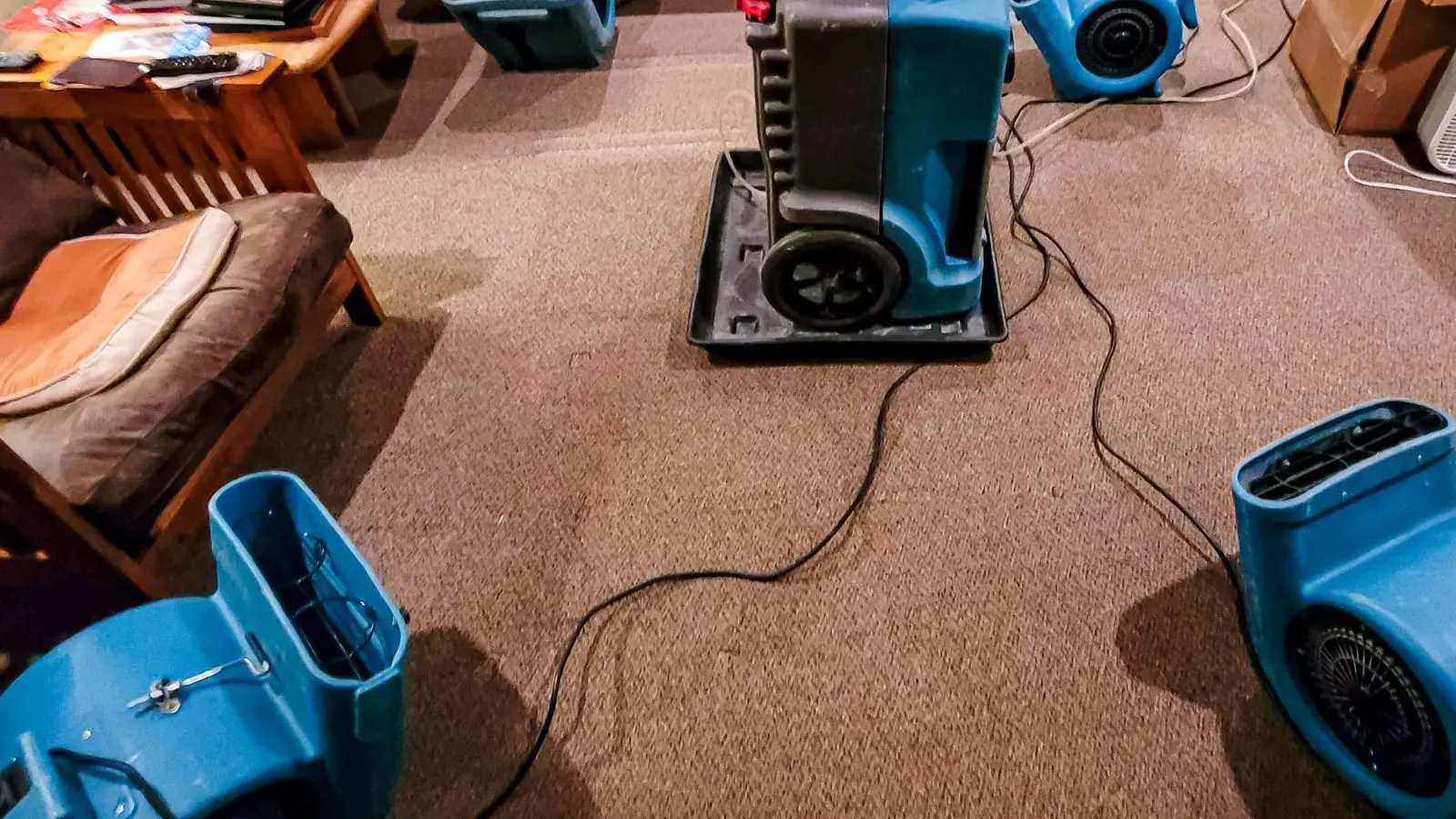
Emergency water extraction means getting liquid water out of the building before anything else is attempted. If you are looking at water on the floor right now, stop the source if you can, keep clear of wet outlets, and call the 24/7 line. Every hour it sits, more of it moves into the subfloor and the wall bases.
In a Delaware home the usual sources are a failed supply line, a sump pump that stopped, or a drain that backed up. The fix for the cause belongs to a plumber. Getting the water out, and proving the structure is dry afterward, belongs to us.
When standing water is an emergency
Any depth of water on a finished floor is urgent, because drywall and trim start wicking it upward straight away. Two inches in a carpeted basement can mean a wet line eight inches up the wall by morning.
Treat it as a higher risk if the water came from a floor drain, a toilet or outside. That water is contaminated, and it should be handled as a sewage cleanup job or as flood water from outside, with protective gear.
How the water is removed
| Tool | Used for | Why it matters |
|---|---|---|
| Submersible pump | Deep water, an inch or more | Moves volume quickly to a drain or outside |
| Truck-mounted extraction unit | Carpet, pad and hard floors | Strong vacuum pulls water out of materials |
| Portable extraction unit | Upper floors and tight rooms | Reaches where a hose run cannot |
| Weighted extraction tool | Carpet with pad underneath | Presses water out of the pad without lifting it |
A technician first checks that the area is electrically safe, then works from the deepest point toward the exit. Furniture is lifted onto blocks so legs do not stain the floor. Water is counted in passes: the wand goes over each section until almost nothing comes up.
What happens after the water is gone
Extraction removes liquid. It does not remove the moisture already absorbed by wood, drywall and concrete. Moisture meters and a thermal imaging camera show how far that went.
From there the job becomes structural drying with air movers and dehumidifiers, which usually runs for several days. Skipping that step is how a floor that looks dry on Tuesday grows a musty smell by the weekend.
Removing water from specific places
Callers describe the same handful of situations. A garage or utility room that took water from a tank. A finished lower level with soaked carpet. A crawl space with water standing on the liner. Each has its own page here, and a wet lower level is covered in detail under basement water cleanup.
We pump out buildings. We do not pump yards, ponds or window wells that are simply holding rain, and we do not rent out equipment. If the water is only outside, a landscaper or drainage contractor is the right call.
Local notes for Delaware and nearby towns
City water in Delaware arrives under pressure through about 190 miles of water line, so a broken line inside the house does not slow down on its own. Know where your main shut-off is before you need it. It is usually where the service line enters, near the meter.
Extraction crews also go out to Lewis Center, Kilbourne, Radnor and Ostrander. Outside the city limits a different utility supplies the water, but the shut-off advice is the same.
What Decides the Cost of Water Extraction
- Depth and spread: gallons to remove and the number of rooms involved.
- Water category: clean supply water costs less to handle than drain or outside water.
- Flooring: carpet and pad take more passes than tile or sealed concrete.
- Access: an upstairs room or a long hose run adds time.
- What follows: drying days and any repairs are scoped separately.
The scope and price are explained before the pumps start. Insurance often treats sudden water differently from slow leaks, so check your policy or ask your insurer.
Water Extraction Questions From Delaware Homeowners
Do you handle water extraction emergencies at night or on weekends in Delaware?
Yes. Extraction is the one service that cannot wait for office hours, so the line is answered 24/7 and crews are sent out at night, on weekends and on holidays. Tell the dispatcher how deep the water is and whether it is still coming in.
Can I use a shop vacuum until someone arrives?
For a small amount of clean water on a hard floor, yes, as long as the vacuum is rated for wet use and you plug it into a dry outlet away from the water. Do not use one on sewage or outside flood water, and do not wade into water that reaches outlets or appliances.
How long does water extraction take?
A single room is often finished in an hour or two. A whole lower level with pad under the carpet can take most of a day. Drying equipment is usually set the same visit.
Will you remove the wet carpet?
Only when it has to go. Carpet soaked by clean water can often be extracted and dried in place. The full decision is explained on the wet carpet page.
Question not listed? Talk it through with the 24/7 line at (833) 521-1033.