
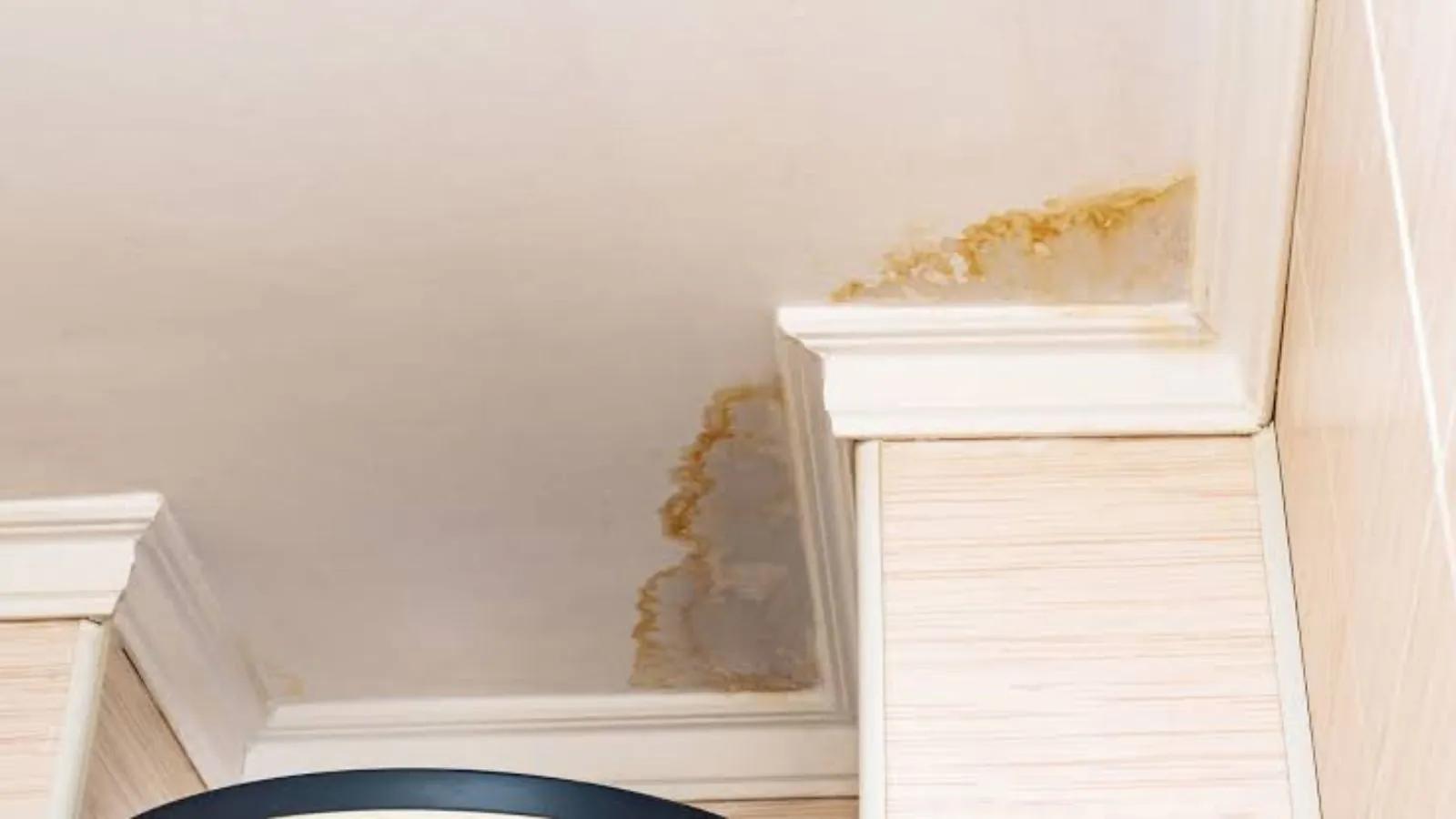
Wall and drywall water damage repair is the work of finding how far water traveled inside a wall, drying the cavity, and replacing the drywall, insulation and trim that could not be saved. The repair you see at the end, new board and paint, is the easy part. Getting the inside dry first is what makes it last.
Signs of water inside a wall
- Paint that bubbles, blisters or peels
- A stain with a tide line, often yellow or brown
- Drywall that feels soft or crumbles when pressed
- Baseboards swelling or pulling away from the wall
- A musty smell near one section of wall
- Wallpaper lifting at the seams
How drywall reacts to water
Drywall is gypsum pressed between two sheets of paper. The paper wicks water upward, so a wall standing in an inch of water can be wet a foot or more above the floor. The gypsum softens and loses strength. Paper that stays damp is where mold tends to start.
Behind the board is insulation. Fiberglass holds water against the back of the drywall and the framing, and it does not dry well inside a closed cavity.
Dry it or cut it out?
| Situation | Usual approach |
|---|---|
| Clean water, wet less than a day or two, board still firm | Dry in place with baseboards off and air injected into the cavity |
| Board soft, swollen or sagging | Cut out and replace |
| Wet insulation in the cavity | Open the wall, remove the insulation |
| Contaminated water | Remove drywall above the wet line |
| Wet for many days | Open, inspect, treat and rebuild |
A cut made in a straight line a set height above the floor is called a flood cut. It looks drastic, but it gives a clean edge for new board and lets the cavity dry properly.
How the wall is assessed
A technician uses a pinless moisture meter to scan the surface, a pin meter to confirm, and a thermal imaging camera to see cool, damp areas. The wet zone is marked on the wall. This matters because the stain is rarely the whole story. Water from a ceiling leak can run down inside a wall and leave the surface looking perfect.
Plaster walls
Older Delaware homes, including many near the Ohio Wesleyan campus and in the Historic Northwest Neighborhood, have plaster over wood lath. Plaster stands up to a single wetting better than drywall. It dries slowly, and the worry is the plaster losing its grip on the lath. We check for hollow-sounding areas and prefer to dry and keep sound plaster where we can. Matching it is harder than matching drywall, so saving it is usually worth the extra days.
The repair
Once readings are dry, new insulation and drywall go in. Joints are taped and finished in several coats. A stain-blocking primer is used on any remaining marks. Texture is matched and the wall is painted, often corner to corner so the patch does not show. Baseboards are reinstalled or replaced.
Is it urgent?
If water is actively running inside a wall, close the main valve and call the 24/7 line. That is a burst pipe situation. A stain that appeared after an old leak can be booked as a normal visit. Stains that start overhead are covered under ceiling water damage, and the drying method is on the structural drying page.
Permits in Delaware
Replacing drywall is cosmetic work in most cases. If the repair touches wiring, framing or mechanical systems, the City of Delaware Building Division says a permit is likely required, so ask them first.
Wall repairs are available in Delaware, Lewis Center, Kilbourne, Radnor and Ostrander.
What Sets the Price of a Wall Repair
- Linear feet of wall affected and how high the water wicked.
- Whether the cavity can be dried in place.
- Insulation replacement.
- Drywall versus plaster, and texture matching.
- Painting one wall or the whole room.
The scope and price are explained before work starts. Whether a policy responds turns on what caused the water, which is a question for your insurer.
Wall and Drywall Water Damage Questions From Delaware Homeowners
Does wet drywall always have to be replaced?
No. Drywall wet briefly with clean water, and still firm, can often be dried. Soft, swollen or contaminated board is replaced.
How do I know if there is water behind my wall?
Look for bubbling paint, a soft spot, swelling baseboards or a musty smell. A moisture meter confirms it without opening the wall.
Can I paint over water-damaged drywall?
Only once the cause is fixed and the wall reads dry. Use a stain-blocking primer, or the mark will show through.
Why were holes drilled behind my baseboards?
To push dry air into the wall cavity without removing the drywall. The holes are hidden when the baseboard goes back.
How long before the wall can be closed up?
When the framing reads dry, usually after several days of equipment. Closing it early traps moisture.
Question not listed? Talk it through with the 24/7 line at (833) 521-1033.