
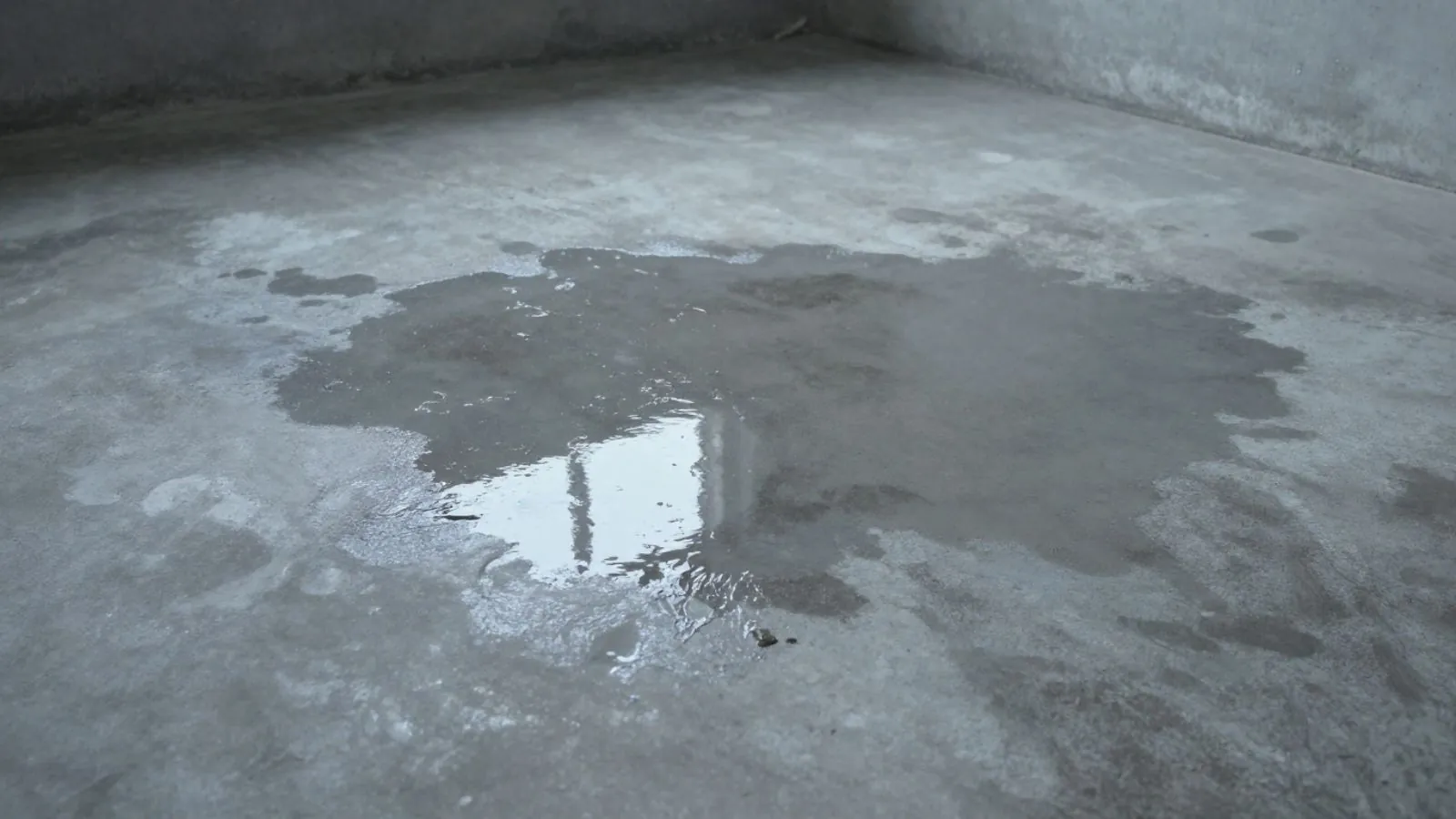
Slab leak water damage cleanup is the drying and repair of flooring, walls and contents after a pipe under a concrete floor has leaked. If water is coming up through the floor now, close the main valve and call the 24/7 line.
Wet floor, warm spot, no obvious source?
People rarely search for "slab leak" first. They notice a patch of floor that feels warm underfoot, carpet that is damp with no spill, a water bill that jumped, or the sound of water running when every tap is off. Those are the classic signs of a pressurized line leaking below the concrete, and the trade name for it is a slab leak.
Slab leak emergency signs
- Water seeping up at the joint between floor and wall
- Flooring lifting, darkening or cupping in one area
- A water meter that turns with everything shut off
- A hot water line leak that leaves the water heater running constantly
Close the main and the water stops. That buys time to bring in a leak detection plumber.
Who does what
A plumber locates the leak with acoustic and pressure equipment and repairs or reroutes the line. That can mean opening the concrete. We do not locate or repair pipes.
We handle the water above the slab. Flooring is lifted where it is wet, the concrete and the wall bases are dried, and the finishes are put back. Often we are on site between the plumber's two visits, drying while the repair is planned.
How common is this in Delaware?
We will be honest: we have no figure for it. Slab leaks happen where water lines run under a concrete floor. Many Ohio homes have basements instead, where the piping is exposed and a leak shows straight away. We have not checked county housing records for how many Delaware homes are slab-on-grade, so we will not call this common or rare here.
Where it does happen, it follows the same pattern anywhere. Basement floors are slabs too, and a line under one behaves the same way. A wet lower level from any cause is covered on the basement water damage page.
Drying concrete takes patience
| Material | How it behaves when wet | Usual approach |
|---|---|---|
| Concrete slab | Absorbs slowly, releases slowly | Air movement and dehumidification over days |
| Carpet and pad | Pad holds water against the slab | Extract, lift, often replace the pad |
| Laminate or vinyl plank | Traps water underneath | Remove the wet section |
| Hardwood over slab | Cups quickly | Dry with mats, judge later |
Concrete can look dry and still hold enough moisture to ruin new flooring. Readings are taken before anything is reinstalled. The process is described under structural drying, and timber floors under hardwood floor water damage.
Local notes
In the City of Delaware, the plumbing repair is permitted through the Delaware County Health District. If concrete is opened and rebuilt, ask the City Building Division whether a permit applies to your repair.
Crews serve Delaware, Lewis Center, Kilbourne, Radnor and Ostrander.
What Decides the Cost of Slab Leak Cleanup
- How long the line leaked before it was found.
- The flooring type and how much must be lifted.
- Whether walls took water at the base.
- Extra drying days for concrete.
- Reinstalling or replacing the flooring.
The scope and price are explained before work starts. Policies vary on how they treat the water damage versus the pipe repair, so ask your insurer.
Slab Leak Water Damage Questions From Delaware Homeowners
Do you handle slab leak water damage emergencies at night or on weekends in Delaware?
Yes. If water is coming up through the floor, close the main and call. The line is answered 24/7 and a crew can start extraction and drying at any hour.
Why is one spot on my floor warm?
A warm patch on a concrete floor often means a hot water line is leaking beneath it. Check whether your water meter moves with all taps off, then call a plumber for leak detection.
Do you find the leak?
No. A leak detection plumber does that. We dry and repair what the water damaged.
How soon can new flooring go down?
When the concrete meets the moisture level the flooring maker requires. That is measured, not estimated by time.
Question not listed? Talk it through with the 24/7 line at (833) 521-1033.