
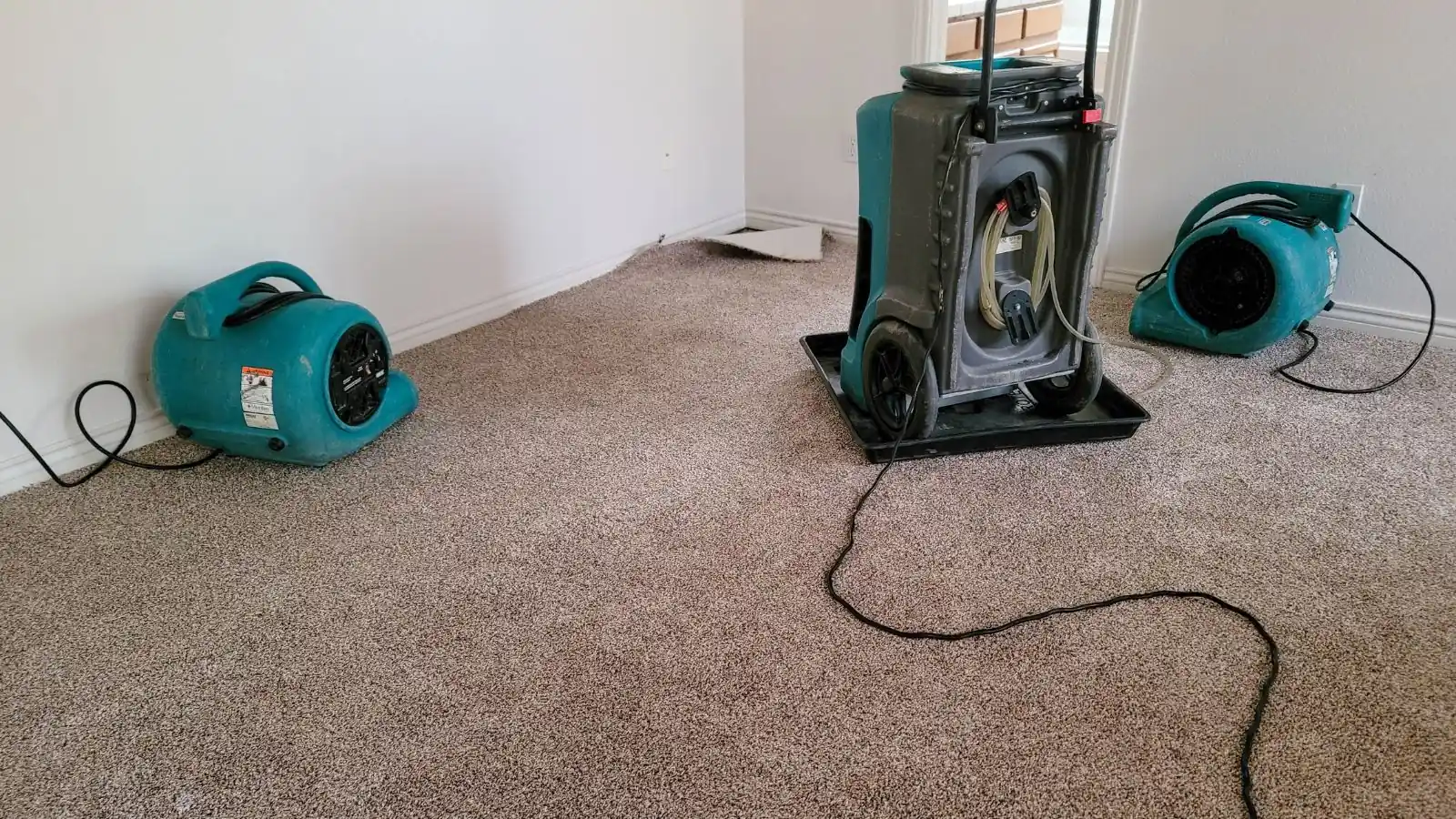
Structural drying and dehumidification is the controlled removal of moisture from the parts of a building that soaked it up: framing, subfloor, drywall, plaster and concrete. It starts after liquid water has been extracted and it ends when measurements, not guesses, show the materials are dry.
Leak cleaned up but the house still feels damp?
This is the situation that brings most people here. The water was mopped up days ago, yet a wall still feels cool, a floor is lifting at the seams, or a room smells musty. That lingering dampness is moisture bound inside the materials. Drying it out with equipment is called structural drying, and it is a separate step from cleanup.
How it works
Three things dry a building: air movement, low humidity and warmth.
- Air movers push a fast, flat stream of air across wet surfaces so moisture evaporates.
- LGR dehumidifiers pull that moisture out of the air and pump it down a drain.
- Temperature is kept warm enough for the equipment to work well.
Take away any one and drying stalls. Fans alone in a closed room just move humid air in circles.
The equipment, in plain words
| Equipment | Job |
|---|---|
| Air mover | Speeds evaporation from floors and walls |
| LGR dehumidifier | Removes water from the air in normal conditions |
| Desiccant dehumidifier | Works in cold spaces and on dense materials |
| Floor drying mats | Draw moisture up through hardwood |
| Injection system | Feeds dry air into wall cavities through small holes |
| HEPA air scrubber | Cleans the air while materials are being removed |
We set and monitor this equipment as part of a drying job. We do not rent it out on its own.
Measured, not guessed
On day one a technician records moisture readings at marked points, plus the temperature and humidity inside, outside and at the dehumidifier outlet. A dry reference is taken from an unaffected part of the same house.
The readings are repeated each visit and written in a drying log. Equipment is moved as areas dry. The job is finished when the wet materials match the dry reference, which is what the ANSI/IICRC S500 standard calls reaching the drying goal.
How long does drying take?
Most homes need several days. What stretches it out:
- Dense or layered materials such as plaster, hardwood and concrete
- Water that sat for days before anyone called
- A cold or unheated building
- Wet insulation left inside walls
Houses in the Historic Northwest Neighborhood, where more than 500 homes are on the National Register, often have plaster and solid wood. Those materials can usually be saved, but they give up moisture slowly and need a gentler, longer plan.
What can stay and what comes out
Drying in place is the aim when the water was clean and work started early. Pad under carpet, soaked insulation and anything touched by contaminated water come out. The reasons are on the sewage backup page for dirty water, and on the wall and drywall page for cavities.
Drying only begins once liquid water is gone, which is the job of water extraction. Timber floors have their own method, described under hardwood floor drying.
Living with the equipment
It is loud and it is warm. Leave it running, keep windows shut and do not move the units. They draw a fair amount of electricity for a few days. Switching them off at night is the most common reason a job runs long.
Drying crews work across Delaware and in Lewis Center, Kilbourne, Radnor and Ostrander.
What Decides the Cost of Drying
- The number of air movers and dehumidifiers the area needs.
- How many days they run, set by the readings.
- Materials: plaster, hardwood and concrete take longer.
- Whether cavities must be opened or injected.
- The daily monitoring visits.
The scope and price are explained before equipment is set. The drying log doubles as documentation if you report the loss to your insurer.
Structural Drying Questions From Delaware Homeowners
How do I know if my walls are still wet inside?
You cannot tell by touch. A wall can feel dry and read wet a quarter inch in. A moisture meter gives a number, and a thermal camera shows the cool, damp areas.
Can I dry the house with my own fans and a home dehumidifier?
For a small spill on a hard floor, yes. Household units remove a few pints a day. A soaked room holds gallons, and the gap is why professional equipment exists.
Do I have to leave while it dries?
Usually not. It is noisy and warm, but most people stay. After contaminated water, the affected rooms are closed off.
Why not just open the windows?
Outside air is often more humid than the air the dehumidifier is producing, and it undoes the work. Keep the house closed unless the technician says otherwise.
What happens if I skip drying?
Trapped moisture leads to odor, swelling and, after a few days, a real risk of mold. Repairs made over damp framing tend to fail.
Question not listed? Talk it through with the 24/7 line at (833) 521-1033.