
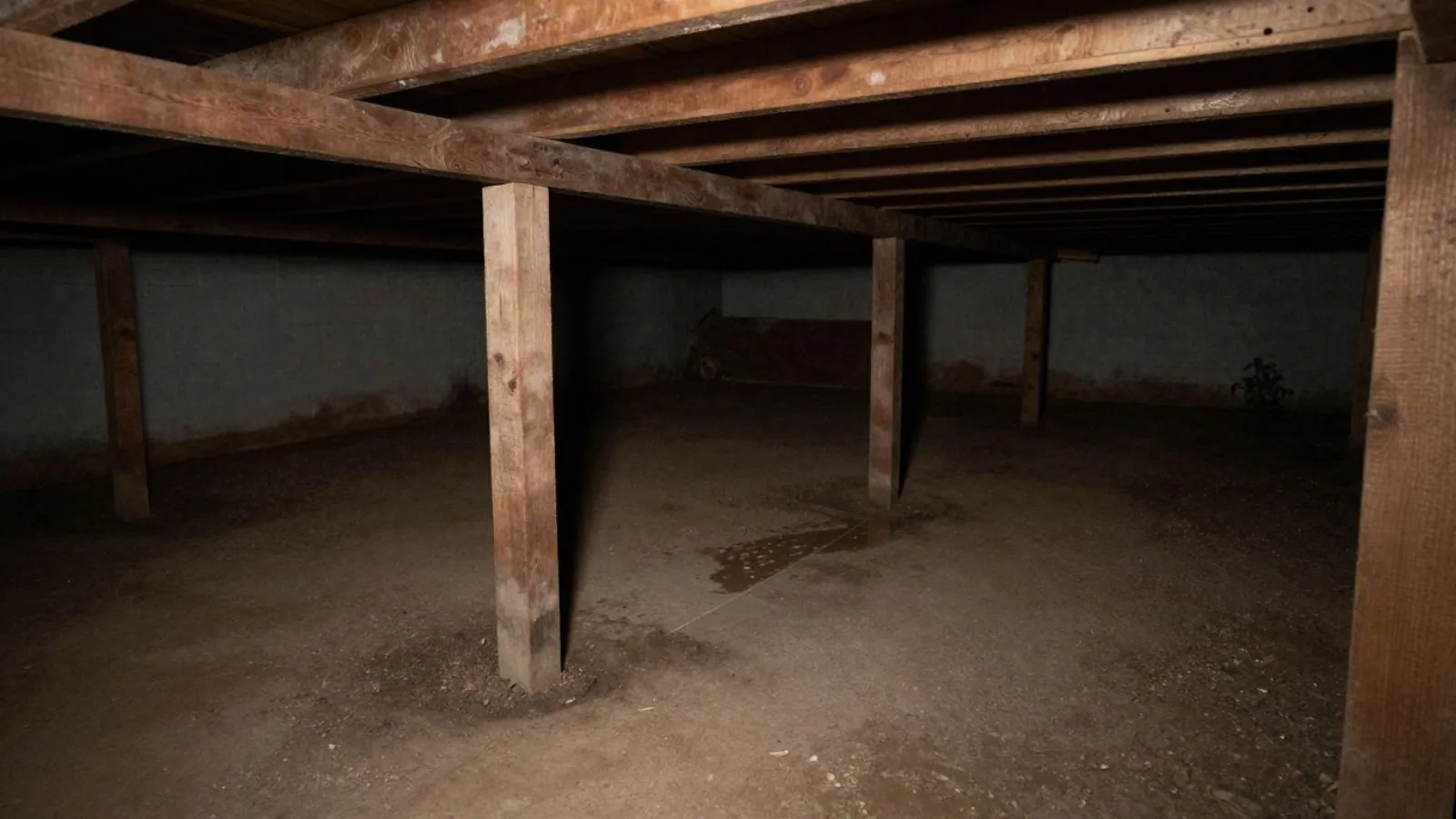
Crawl space water damage cleanup means removing water from under the house, taking out wet insulation and debris, and drying the joists and subfloor before they decay. Most people find the problem by smell or by a floor that has started to feel soft, not by looking, because nobody goes down there for fun.
Signs of water in a crawl space
- A musty smell in the rooms above, stronger in humid weather
- Floors that feel cold, damp or springy
- Insulation hanging down between the joists
- Water standing on the ground or the plastic liner
- Rust on ductwork or metal supports
Where the water comes from
| Source | Clue |
|---|---|
| Plumbing leak above | Wet in one area, under a bathroom or kitchen |
| Groundwater or surface runoff | Wet across the low side, worse after rain |
| Failed sump pump | Water centered on the pit |
| Condensation | Damp everywhere in summer, no standing water |
The source decides who fixes the cause. A plumber handles pipes. A drainage or foundation contractor handles grading and waterproofing. We do neither. Our work is the cleanup and drying, and it is worth being plain about that so you call the right trades.
How a crawl space is cleaned up
A technician checks the access first. Crawl spaces can hold electrical wiring, gas lines and sewage, so nobody goes in until it is safe.
Standing water is pumped out. Wet fiberglass insulation is pulled down and bagged, because it never dries properly once soaked. Damaged vapor barrier is removed. The wood is then checked with a moisture meter.
Drying a crawl space is its own skill. Air movers push dry air across the joists while a dehumidifier collects the moisture. Vents may be sealed during drying so the equipment is not fighting outside air. The method is the same one described under structural drying, adapted to a space you cannot stand up in.
If the water was sewage, the job follows the rules on the sewage cleanup page: protective gear, removal of contaminated soil cover and disinfection.
How urgent is it?
Standing water from a broken pipe is urgent, and the line is open 24/7 for it. Dampness that has built up over a season is not an emergency tonight, but it should not wait for months. Wood that stays above about 20 percent moisture content will begin to decay over time, and a meter reading tells you where you stand.
What gets put back
New insulation and a new vapor barrier are common. Joists that have softened are repaired by a carpenter. If the floor above cupped, see water-damaged hardwood floors.
Do Delaware homes have crawl spaces?
Some do. We have not verified how many from county housing data, so we will not put a number on it. Many houses in central Ohio sit on basements, and additions or porches enclosed later often sit on crawl spaces. If part of your floor is colder than the rest, there may be one under it.
Service covers Delaware, Lewis Center, Kilbourne, Radnor and Ostrander.
What Affects the Cost Under the House
- The height and access of the space, which sets how slow the work is.
- Gallons to pump and whether the water is contaminated.
- How much insulation and liner must be removed.
- Drying days for the joists and subfloor.
- New insulation, vapor barrier and any carpentry.
You get the scope and price first. Groundwater is often treated like flood by insurers and a pipe leak is not, so ask your insurer which applies.
Crawl Space Water Damage Questions From Delaware Homeowners
How do I know if my crawl space has water in it?
Open the access and look with a flashlight from outside the opening. Standing water, hanging insulation or a strong musty smell are the signs. Do not crawl in if you see water near wiring.
Can a crawl space dry on its own?
A little dampness can, with good ventilation. Standing water and soaked insulation will not, and the wood stays wet meanwhile.
Do you install sump pumps or waterproofing?
No. We do the water removal, cleanup and drying. A foundation or drainage contractor handles permanent fixes.
Is a musty smell upstairs really from the crawl space?
Often, yes. Air moves upward through a house, and it carries the smell of whatever is damp below.
Question not listed? Talk it through with the 24/7 line at (833) 521-1033.