
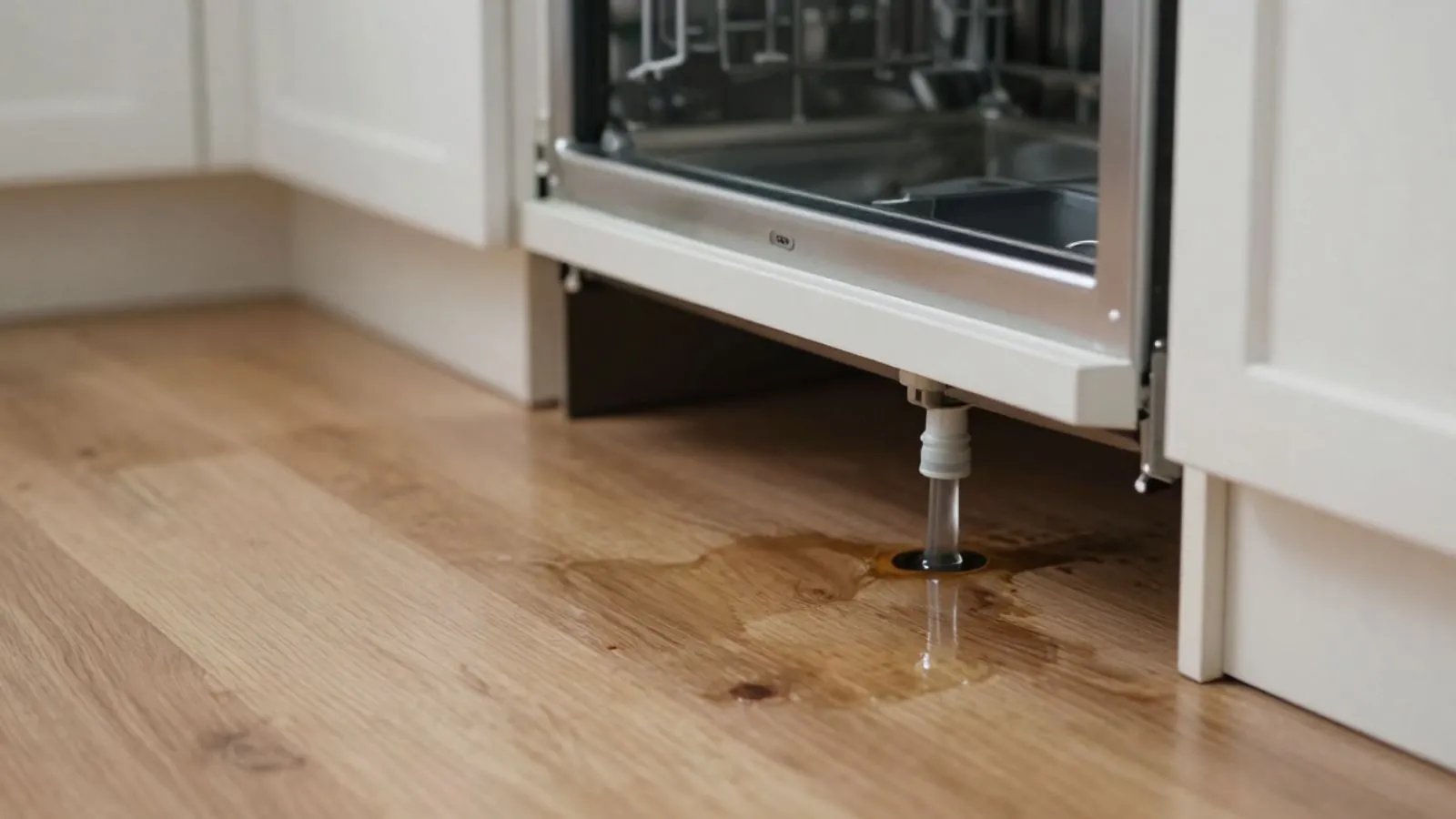
Appliance leak water damage cleanup covers water released by a household machine: a washing machine supply hose, a dishwasher, a refrigerator ice-maker line or a garbage disposal connection. If one is leaking now, close its supply valve, unplug it only if the plug and floor around it are dry, and call the 24/7 line.
Appliance leak emergency: stop the water first
- Washing machine: close both valves on the wall box behind it.
- Dishwasher: close the hot water valve under the kitchen sink.
- Refrigerator: close the small valve on the ice-maker line, often under the sink or in the basement below.
- Cannot find the valve? Close the main.
A burst washer hose is a true emergency. It is a pressurized supply line and it will not stop until a valve is closed.
Three machines, three kinds of damage
| Appliance | How it usually leaks | Water category | Typical hidden damage |
|---|---|---|---|
| Washing machine | Supply hose bursts, or drain hose slips | Category 1 from the hose, Category 2 from the drain | Subfloor, ceiling below an upstairs laundry |
| Dishwasher | Door seal, pump or supply line | Category 2 once it contains food soil | Cabinet bases and flooring under them |
| Refrigerator | Plastic ice-maker tubing cracks | Category 1 | Flooring and subfloor behind and under the unit |
The category matters. Clean supply water gives materials a chance to be dried in place. Discharge water from a wash cycle carries detergent and soil, so carpet pad it reached is normally removed.
Slow leaks are the costly ones
A refrigerator line can drip behind the unit for weeks. Nobody looks there. The first sign is a soft spot in the floor, a cupped board or a stain on the ceiling of the room below.
When that happens the visible damage is a small part of the loss. A technician uses a moisture meter and thermal imaging to trace how far the water ran under the flooring. Cupped boards are covered on the hardwood floor page, and soaked cabinet bases on the kitchen water damage page.
How the cleanup is done
The appliance is pulled out and the water is extracted. Flooring is tested. Laminate and floating floors that took water underneath usually have to come up, because the core swells and the joints never close again. Tile and sheet vinyl are checked for water trapped beneath.
Air movers and LGR dehumidifiers dry the subfloor and wall bases. If the laundry is upstairs, the ceiling below is opened where the meter says it is wet. Then the flooring, baseboards and drywall are put back.
We do not repair or replace appliances. An appliance technician or plumber fixes the machine. A washer hose is a few dollars at a hardware store, and checking yours for bulges once a year is worth the two minutes.
Notes for Delaware homes
Subdivisions built in the last couple of decades, including Cheshire Crossing on the south side with its 398 single-family homes, are finished with drywall and engineered flooring that react quickly to water. In that kind of house, quick extraction makes a real difference to what can be kept. We make no claim about how often appliances fail in any neighborhood.
Service covers Delaware, Lewis Center, Kilbourne, Radnor and Ostrander.
What Changes the Cost of an Appliance Leak
- Sudden burst or weeks of slow dripping.
- Clean supply water or dirty discharge water.
- Type of flooring and whether it must be lifted.
- An upstairs laundry with a ceiling below.
- Cabinet or drywall repairs afterward.
The scope and price come before the work. Many policies treat a sudden failure differently from a long, slow leak, so check your policy or ask your insurer.
Appliance Leak Water Damage Questions From Delaware Homeowners
Do you handle appliance leak emergencies at night or on weekends in Delaware?
Yes. A washer hose that bursts during an evening cycle needs attention that night, not on Monday. The line is answered 24/7 and crews are dispatched at all hours.
My laminate floor got wet under the dishwasher. Can it be dried?
Rarely. Laminate has a fiberboard core that swells when wet and does not shrink back. If water got under the planks, that section is usually replaced after the subfloor is dried.
How do I know if a fridge line has been leaking?
Look for a soft or raised floor near the unit, a musty smell, or a stain on the ceiling below. A moisture meter confirms it in minutes.
Do you move the appliance?
Yes. It has to come out so the floor and wall behind it can be checked and dried.
Question not listed? Talk it through with the 24/7 line at (833) 521-1033.