
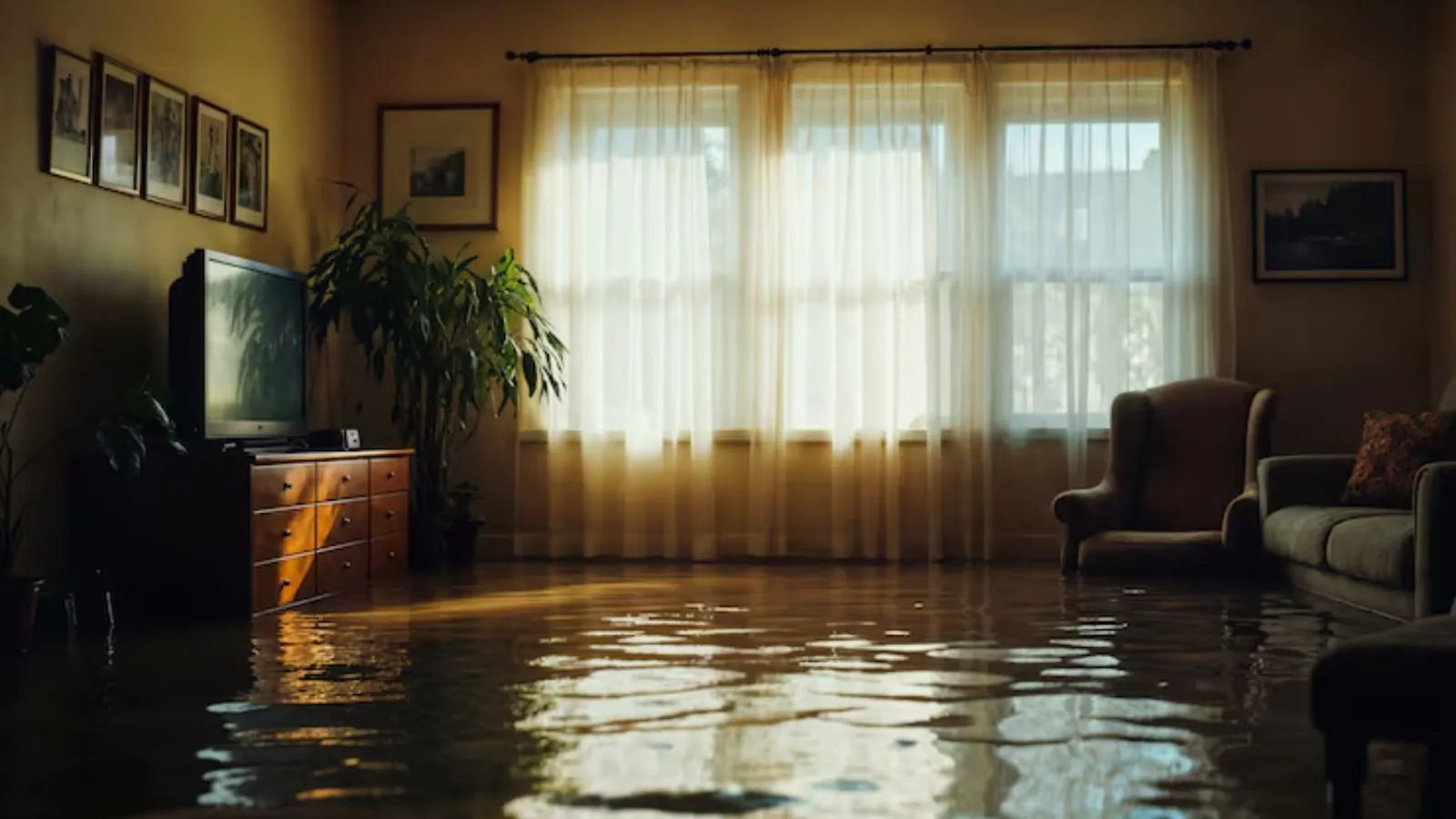
A wet television is an inconvenience. A wet room with live power is a hazard. Deal with the second problem first, and treat the devices themselves as something to sort out once everyone is safe.
The safety rules, in order
- If water is touching outlets, power strips, cords or appliances, do not step into it.
- Do not touch a plug, switch or device while you are standing on a wet floor.
- If the electrical panel is in a dry area and you can reach it standing on a dry floor, switch off the breakers for the wet rooms.
- If the panel is wet, or you would have to cross water to reach it, leave it. Call your electric utility or an electrician to cut the power.
- If you see sparks, smell burning or hear buzzing, get out and call 911.
Never operate a breaker while standing in water. No device is worth that.
When it is safe to unplug
You can unplug a device when three things are true: the floor you are standing on is dry, your hands are dry, and the plug and outlet themselves are dry. If the outlet has been splashed, switch off its circuit at the panel first, then unplug.
If a device is wet and still switched on, do not use its own power button. Cut the power at the breaker.
Why you should not switch a wet device on
Water by itself does not always destroy electronics. Electricity flowing through wet circuits does. A short circuit burns out components in an instant. A device that got wet while switched off, and is dried fully before power returns, has a fair chance. One that is switched on "to see if it still works" often does not survive the test.
What water does over time
Even after it dries, water leaves minerals and dirt on circuit boards. Those deposits cause corrosion, which eats at connections over days and weeks. That is why a phone that survives a dunking sometimes fails a month later.
The dirtier the water, the worse this is. Clean tap water is the mildest. Gray water and anything from a drain or from outside leave far more residue and are much harder on electronics.
Device by device
| Item | What to do | Outlook |
|---|---|---|
| Phone or tablet | Power off, do not charge, dry for several days, seek repair | Fair if switched off quickly |
| Laptop | Power off, unplug, remove battery if removable, stand open and inverted to drain | Fair with professional cleaning |
| Desktop computer | Unplug, do not power on. The drive can often be recovered even if the machine cannot | Data often recoverable |
| Television | Unplug when safe, leave off, have it inspected | Poor if water got inside |
| Kitchen appliances | Unplug when safe. Have motors and controls checked | Varies |
| Furnace, water heater, washer, dryer | Do not use until a qualified technician has inspected them | Controls and motors may need replacing |
| Outlets, switches and wiring | An electrician must inspect anything that was submerged | Often replaced |
The rice trick for phones is less effective than simply leaving the device powered off in dry, moving air for several days.
Your data matters more than the device
A hard drive or memory card can often be read even when the computer is finished. Do not try to power the machine on to copy files. Take the drive to a data recovery service, and tell them it was water damaged.
The lesson for next time is plain: keep copies of photographs and documents online or on a drive stored somewhere else.
Fixed electrical systems
Outlets, wiring and the panel are not electronics you can dry on a shelf. If water reached them, an electrician needs to inspect them before the power goes back on. That applies especially after contaminated water, which leaves conductive residue.
How this fits into a restoration job
A technician checks for electrical hazards before any equipment is plugged in. Electronics are moved to a dry room early. We do not repair electronics. We can list them for your records, and for businesses we refer wet equipment to a specialist.
In a commercial space with servers and point-of-sale systems, protecting equipment is one of the first priorities, as described on our commercial water damage page. In a home, the usual culprit is water coming through a ceiling onto a desk or television, which is covered under ceiling water damage repair.
For insurance
Photograph each damaged device, including its model and serial number label. Do not throw anything away until your insurer agrees. Coverage for electronics depends on your policy, so ask.
Electrical Work and Permits in Delaware, Ohio
If water reached wiring, outlets or the panel, the repair is electrical work. The City of Delaware Building Division, a state-certified building department, says that structural, electrical or mechanical work likely requires a permit. Source type: the city's Building Division page.
In practice, a licensed electrician replaces what was submerged and arranges the permit and inspection. Ask for the permit number. A passed inspection is your assurance that the system is safe to switch back on, and it is useful for an insurance file.
Outside the city, the permit office differs. In Ostrander the village issues permits and structural items also need a county permit, and Kilbourne falls under the township and county.
Electronics and Water Questions
Do I need a permit to replace water-damaged outlets in Delaware, OH?
Electrical work likely requires a permit according to the City of Delaware Building Division. Your electrician normally arranges it. Ask them to confirm before work starts.
How long should electronics dry before I try them?
At least several days in dry, moving air, and longer for anything that was fully submerged. Having a repair shop clean and test the device first is safer.
Is it safe to use an outlet that got wet?
Not until an electrician has checked it. Outlets that were submerged are usually replaced.
Question not listed? Talk it through with the 24/7 line at (833) 521-1033.