
The scope of work is the list of tasks behind the price. Insurers, contractors and adjusters all work from it. You do not need training to read one, only a key to the shorthand and a method.
How a scope is organized
Most scopes are grouped by room. Under each room is a list of lines. Each line has a description, a quantity, a unit and usually a price. At the end are totals, and sometimes overhead, profit and tax.
Start by checking the room list. Is every affected room there? Is any room listed that was not affected?
The units
| Abbreviation | Means | Used for |
|---|---|---|
| SF | Square feet | Drywall, flooring, paint, insulation |
| LF | Linear feet | Baseboards, trim, a flood cut along a wall |
| SY | Square yards | Carpet and pad |
| EA | Each | Doors, outlets, pieces of equipment, fixtures |
| HR | Hours | Labor that is hard to measure otherwise |
| DA or Day | Days | Equipment rental per unit |
The action words
| Term | Means |
|---|---|
| R&R | Remove and replace with new |
| D&R, or detach and reset | Take off carefully and put the same item back |
| Tear out | Remove and dispose of |
| Clean | Clean the existing item |
| Seal or stain block | Apply primer to stop stains showing through |
| Mask or prep | Protect surrounding areas before painting |
| Content manipulation | Move furniture and belongings out of the way |
The difference between R&R and D&R is where a lot of money sits. Baseboards that are detached and reset cost far less than new ones. Check which was chosen and whether it matches the condition of the item.
Drying lines
Equipment appears as a count multiplied by days. "Air mover, 6 EA, 4 days" means six units for four days, twenty-four unit-days in all.
Look for:
- The number of air movers per room, which should relate to the room's size
- The type of dehumidifier
- Monitoring visits, usually one per day
- Any wall cavity or floor drying system, listed separately
The count and the days should be backed by a drying log. The method behind those readings is on our structural drying page.
Check it with a tape measure
Pick one room and verify it.
- Measure the room. Length times width gives the floor area in square feet.
- Add the lengths of the walls for the perimeter in linear feet.
- For wall area, multiply the perimeter by the ceiling height.
Now compare. If the scope lists 400 square feet of drywall removal in a room with 320 square feet of wall, something is wrong. If the baseboard line is shorter than the perimeter of a room where every wall was wet, an item was missed.
A flood cut is usually listed in linear feet at a stated height, for example two feet. Check the height matches what was actually cut.
Lines people miss
- Paint for the whole wall or ceiling, not only the patch
- Texture matching
- Stain-blocking primer
- Reinstalling doors, vents, outlet covers and fixtures
- Floor protection during the work
- Final cleaning
- Disposal fees
Overhead and profit
General contractors commonly add overhead and profit as percentages at the end. Whether your insurer pays those depends on the job and the policy. If the line is there, ask what it covers.
Depreciation, RCV and ACV
On an insurer's version you may see three columns. RCV is replacement cost value, the cost to replace with new. Depreciation is the amount held back for age and wear. ACV is actual cash value, which is RCV minus depreciation. Some policies release the held-back amount once repairs are complete. Ask your insurer how yours works.
When two scopes disagree
Put them side by side, room by room. Mark each line that appears on one and not the other, and each quantity that differs. Then ask both parties about those lines only. It turns a vague dispute into a short list.
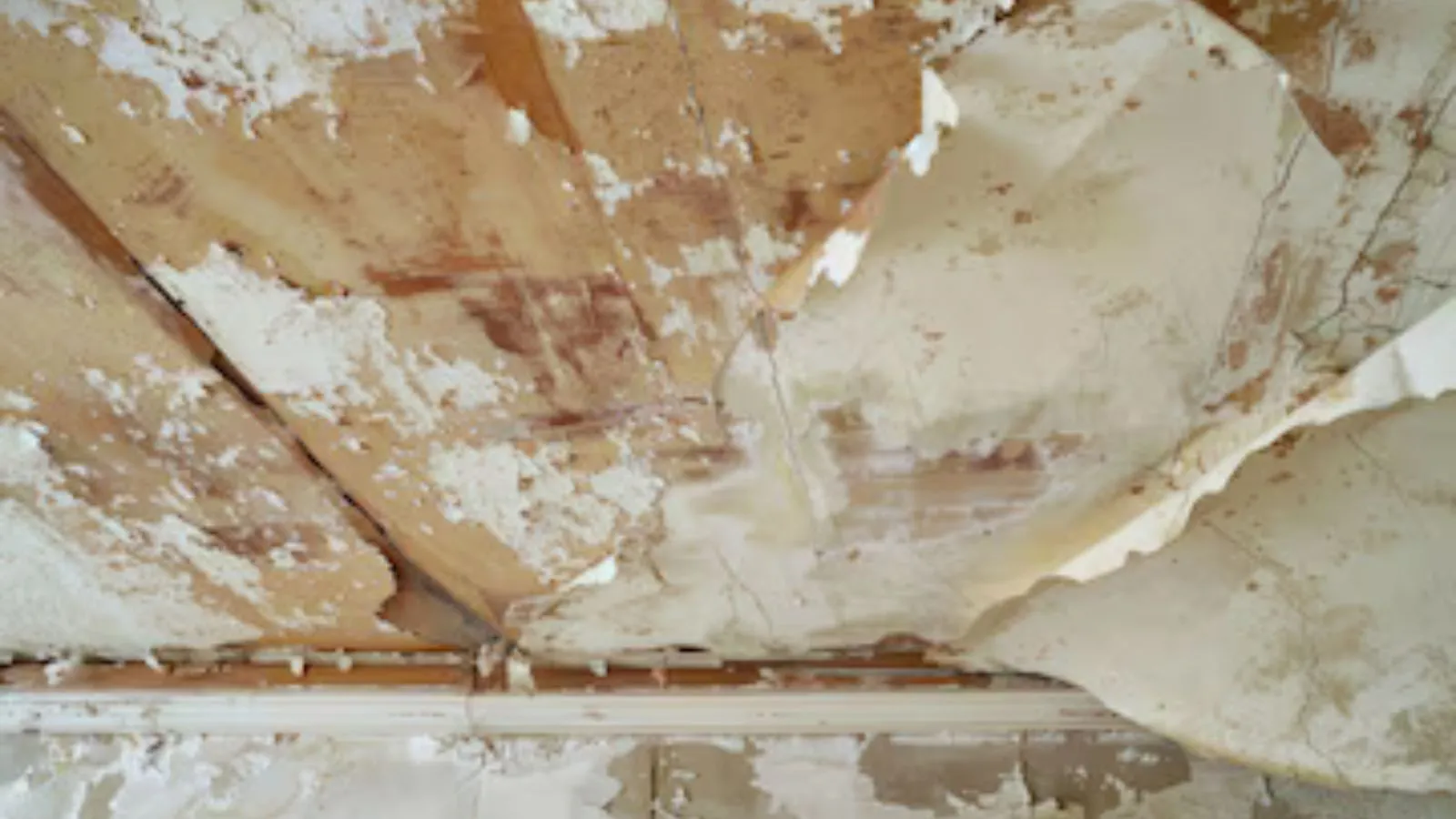
Overhead leaks and wall repairs are where scopes most often differ, since the visible stain is smaller than the wet area. See ceiling water damage repair for why.
Reading a Scope for an Older Delaware House
Standard scope lines assume drywall. Many older Delaware homes do not have it. The Historic Northwest Neighborhood has more than 500 homes and carriage houses on the National Register of Historic Places, and houses of that age often have plaster on wood lath. Source type: the neighborhood association's description of the district.
If your walls are plaster, check that the scope says so. A line that reads "R&R drywall" in a plaster house means either the plaster is being replaced with drywall, which changes the look and feel of the wall, or the scope was written without looking closely. Ask which. Plaster repair is a different line with a different price.
The same check applies to older houses in Radnor and Kilbourne.
Scope of Work Questions
My Delaware home has plaster walls. What should the scope say?
It should name plaster, and state whether it is being repaired or replaced with drywall. If it lists only drywall, ask for it to be corrected before work starts.
What does R&R mean on a scope of work?
Remove and replace. The existing item is taken out and a new one is installed.
Can I ask for changes to a scope?
Yes. If something is missing or a quantity looks wrong, raise it before you sign. A scope is meant to be checked.
Question not listed? Talk it through with the 24/7 line at (833) 521-1033.